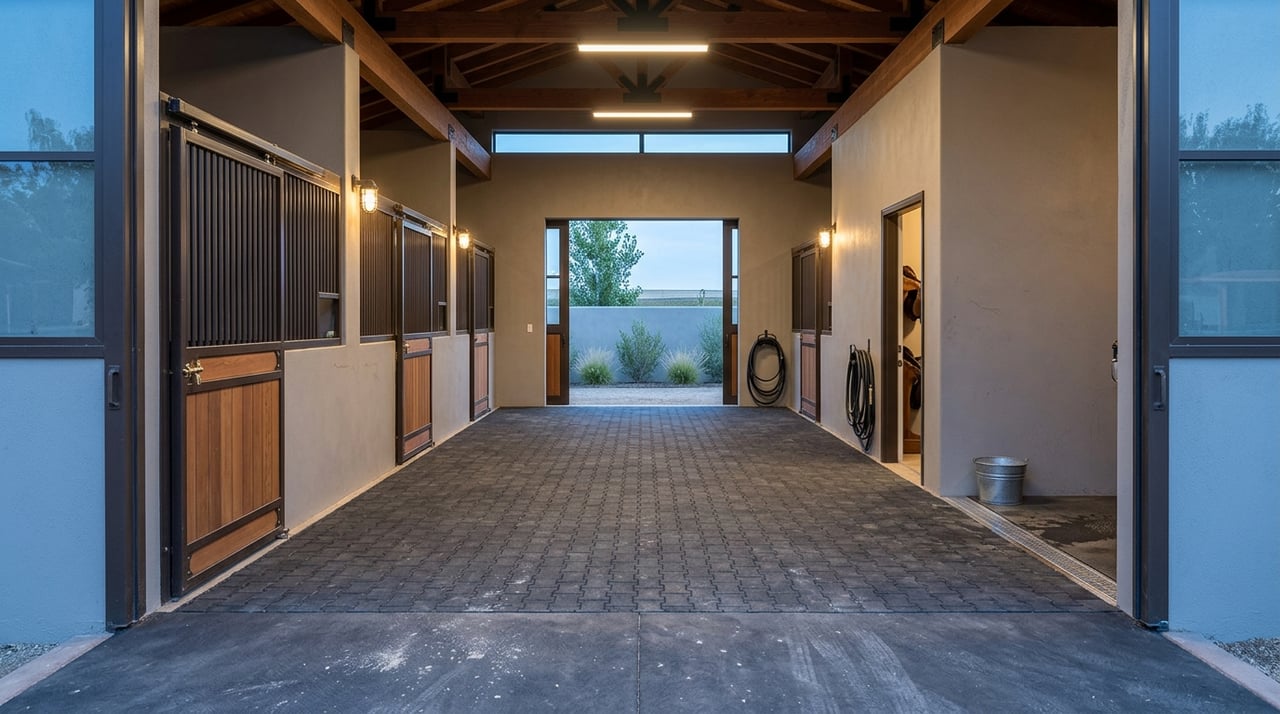
If you want a horse property in the South Valley corridor, one question can shape your whole search: Bosque Farms or Peralta? Both communities offer rural character, agricultural land uses, and horse-friendly properties, but they do not feel exactly the same once you start comparing acreage, zoning, irrigation details, and day-to-day convenience. This guide will help you understand the practical differences so you can focus your search with more confidence. Let’s dive in.
Bosque Farms vs Peralta at a Glance
For many buyers, the biggest difference comes down to convenience versus elbow room. According to the Village of Bosque Farms, Bosque Farms is a rural community about 20 minutes from downtown Albuquerque, while county planning materials place Peralta directly south of Bosque Farms in the same east-valley corridor.
In simple terms, Bosque Farms is often the better fit if you want a more compact village setting with easier access to services and a shorter commute. Peralta is often the better fit if you want a more rural feel and more flexibility in acreage and property layout.
Why Buyers Choose Bosque Farms
Bosque Farms tends to appeal to buyers who want horse property without giving up everyday convenience. The village offers a more self-contained feel, with municipal services and community amenities that can make daily life simpler.
The village site lists services and facilities such as a public library, community center, parks and recreation, police, fire, EMS, water and sewer, plus planning and zoning. That mix can matter if you want a rural property but still value easy access to local services in one place.
Bosque Farms has a more built-out feel
Bosque Farms has long had a mix of residential and agricultural land uses. The local code and planning materials show that many tracts were subdivided into one-acre-or-less parcels in the early 1960s, which helps explain why the area includes both smaller residential lots and horse-friendly tracts in the same community. You can review those zoning details in the Bosque Farms code.
For buyers, that means inventory may include properties that feel more village-oriented while still supporting agricultural activity in the right zoning districts. If you want horses but do not necessarily need a very large spread, Bosque Farms may offer more options that balance usability and location.
Bosque Farms zoning for horse properties
Zoning is one of the first things you should verify before falling in love with a property. In Bosque Farms:
- A-R requires a minimum of 2 acres
- R-1 and R-1A require a minimum of 3/4 acre
- Agricultural activities are permitted only in A-R, R-1, and R-1A
- Standard setbacks include 30 feet front, 10 feet side, and 10 feet rear
The code also includes a detail that can matter on horse properties with outbuildings: accessory buildings may sit on a lot line when the boundary is a vehicle-accessible irrigation ditch, roadway, or utility easement. That is one reason parcel layout and existing improvements deserve close review during due diligence.
Why Buyers Choose Peralta
Peralta often attracts buyers who want a little more separation, a more agricultural setting, or the chance to find larger horse setups on a single parcel. It sits directly south of Bosque Farms and shares the same general corridor, but the land-use pattern is typically more rural in feel.
The town plan says commercial land is concentrated along NM 47, while agricultural and agricultural-with-residential uses remain important land-use categories. That can be appealing if you want a property where the rural setting is a bigger part of the experience.
Peralta offers more acreage flexibility
Peralta zoning leans more heavily toward larger rural parcels. Under the town ordinance:
- R-A requires a minimum of 5 acres and is intended to preserve agricultural activities
- R-R requires 2 acres
- R-N requires 1 acre
The ordinance allows agricultural activities in the rural districts, which gives horse-property buyers a useful framework when comparing parcels. You can review those standards in the Town of Peralta zoning ordinance.
For buyers who want more room for barns, arenas, turnout areas, trailers, or future improvements, Peralta may offer a better match. The zoning pattern alone does not guarantee a perfect horse setup, but it often points you toward larger-lot opportunities.
Horse Property Inventory Differences
One of the most useful ways to compare these two communities is to look at the kinds of horse properties that tend to appear in each. Based on recent listing examples in the market, Bosque Farms often features irrigated horse tracts with somewhat smaller, village-style footprints, while Peralta more often surfaces larger properties with more extensive arena and barn improvements.
That is not a formal inventory statistic, but it is a practical market pattern suggested by the listing mix in the research. In Bosque Farms, recent examples included properties around 2.03 acres, 2.81 acres, and 4.36 acres with features such as underground irrigation, water rights, barns, corrals, stables, and riding areas.
In Peralta, recent examples included 1.3-plus acres, 2.98 acres, 3.25 acres, and 4.7 acres, with some properties advertising features like a 3-stall barn, hay barn, lateral access, a 70x200 lighted arena, a heated barn, six stalls, and a round pen. If your priority is a more complete training or riding setup already in place, Peralta may deserve extra attention.
Irrigation and Ditch Rights Matter in Both
For horse-property buyers, water can be just as important as square footage. Both Bosque Farms and Peralta are in the Middle Rio Grande Conservancy District Belen Division, which serves irrigated acreage in Valencia County and maintains about 505 miles of ditch for roughly 30,100 acres.
Here is the key takeaway: ditch adjacency does not automatically mean usable irrigation rights. You need to verify the actual status of irrigation rights, turnouts, easements, and water delivery on a parcel-by-parcel basis.
What to verify before you buy
When you evaluate a horse property in either community, make sure you confirm:
- The exact zoning district
- Whether agricultural activities are allowed on that parcel
- The status of irrigation or ditch rights
- Any recorded easements or turnouts
- Whether existing barns, arenas, corrals, or accessory structures were permitted
- Whether work near ditch rights-of-way may require district licensing
These details can affect how you use the property now and what you can do with it later. A property that looks perfect on first showing may need deeper review before it truly fits your goals.
Commute and Daily Convenience
Commute can be a major tie-breaker, especially if you want a horse property but still need regular access to Albuquerque. Bosque Farms has the stronger case here, since the village describes itself as being about 20 minutes from downtown Albuquerque and has a more built-out local service base.
Peralta still gives you access to the same corridor, but the community tends to feel less self-contained. Peralta’s site lists planning and zoning, code enforcement, animal control, sewer, and municipal court, and its police page states that police service is contracted with Bosque Farms. For some buyers, that difference will be minor. For others, it reinforces Bosque Farms as the more convenient choice.
Which Community Fits Your Goals?
The right answer depends on how you want to live with your horses, not just where you want to buy. Both communities can work well, but they usually serve slightly different priorities.
Bosque Farms may be better if you want:
- A shorter commute toward Albuquerque
- A more compact village setting
- Access to a broader range of local municipal services
- Horse property options that may include smaller tracts with agricultural use in the right zones
Peralta may be better if you want:
- A more rural, agricultural feel
- More acreage flexibility
- Better odds of finding a parcel with a larger barn-and-arena setup
- Land-use patterns that lean more toward rural residential and agricultural uses
A Smart Way to Compare Properties
If you are actively deciding between Bosque Farms and Peralta, it helps to compare homes through the lens of your daily routine and horse needs. Think beyond the house itself and focus on how the property functions.
Ask practical questions like:
- How much acreage do you really need?
- Do you need a riding arena now, or room to add one later?
- Is irrigation essential for pasture use?
- How important is a shorter drive to Albuquerque?
- Do you want a more village-style setting or a more rural atmosphere?
When you answer those questions first, the right market often becomes much clearer.
If you are weighing Bosque Farms against Peralta for a horse property, the best next step is to review zoning, lot layout, water details, and existing improvements before you make assumptions based on a listing. The Lux Real Estate Group can help you compare acreage properties with a clear strategy so you can focus on the options that truly fit your goals.
FAQs
What is the main difference between Bosque Farms and Peralta for horse property buyers?
- Bosque Farms is generally more commute-friendly and service-oriented, while Peralta is generally more rural and often offers more acreage flexibility.
What zoning should you check for horse properties in Bosque Farms?
- You should verify whether the property is in A-R, R-1, or R-1A, since agricultural activities are permitted only in those Bosque Farms districts.
What lot sizes are common under Peralta zoning districts?
- Peralta zoning includes R-A with a 5-acre minimum, R-R with a 2-acre minimum, and R-N with a 1-acre minimum.
Do ditch rights automatically transfer with horse properties in Bosque Farms or Peralta?
- No. Ditch adjacency does not automatically mean usable irrigation rights, so you need parcel-specific verification of water rights, turnouts, easements, and delivery status.
Which community is better for larger barns and arenas, Bosque Farms or Peralta?
- Based on the listing examples in the research, Peralta more often appears to offer larger barn-and-arena combinations on a single parcel.