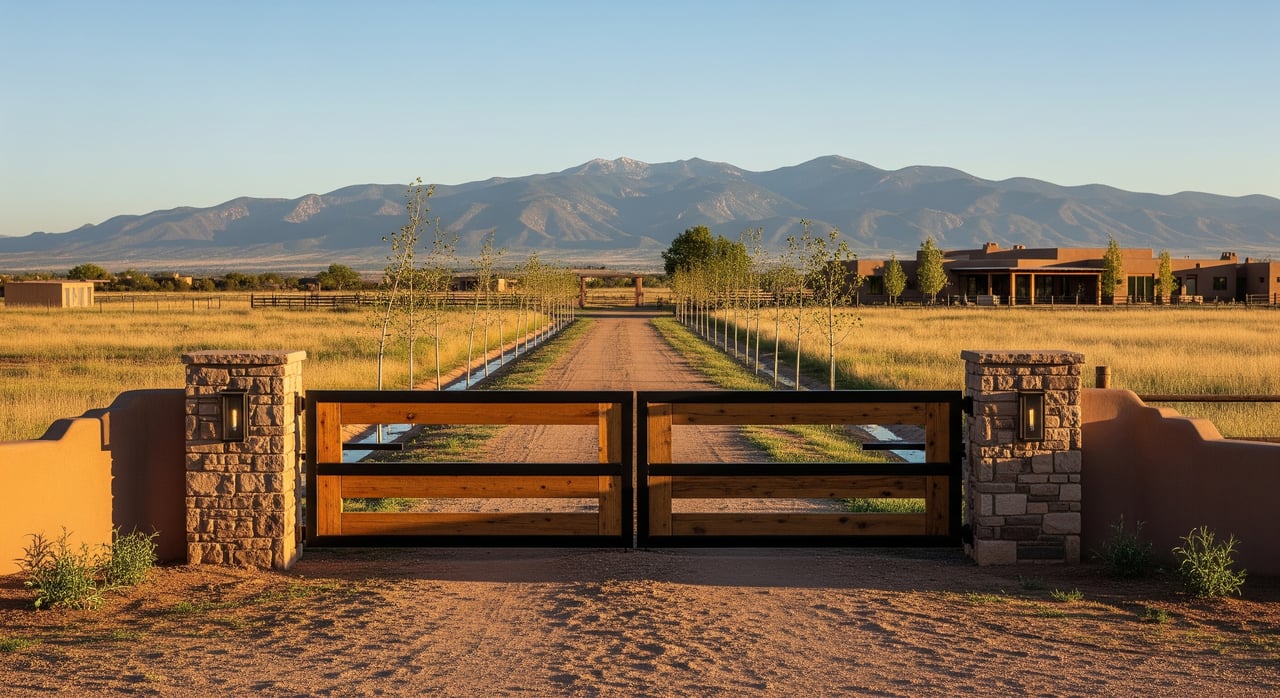
Thinking about acreage in Corrales and wondering whether a gated community or open land is the better fit? You are not alone. Corrales blends rural charm with close-in convenience, which means your choice has real impact on privacy, maintenance, access, and future plans. This guide breaks down the trade-offs and gives you a practical framework and tour checklist so you can move forward with confidence. Let’s dive in.
Corrales acreage basics
Corrales sits along the Rio Grande valley with a long history of small farms, orchards, and equestrian properties. Many lots are larger than typical suburbs and may include private roads, irrigation ditches, and outbuildings. Before you get serious about a property, review zoning and plats with the Village of Corrales and Sandoval County. Start with the Village’s resources and contact planning for parcel-specific questions on use and permits at the Village of Corrales website.
Acequia irrigation is part of daily life for many acreage owners. Access to a ditch, membership in an acequia association, and water-allocation rules can shape how you use your land. If irrigation matters to you, connect with your local acequia leadership and the New Mexico Acequia Association early to confirm rights, dues, and maintenance obligations.
Corrales gives you a rural feel with quick access to Albuquerque services, hospitals, and shopping. That said, some parcels have longer response times or private road access. Map your commute and check emergency access standards with local fire guidance and wildfire resources such as New Mexico State Forestry and floodplain data from the FEMA Flood Map Service Center.
Gated vs. open acreage at a glance
Privacy and security
- Gated communities: You get controlled vehicle access, defined boundaries, and fewer drive-throughs. Review how guests, deliveries, and contractors enter and how the gate works during power outages. Confirm emergency access and keypad or Knox-Box protocols with local responders.
- Open acreage: You often enjoy greater visual privacy, wider setbacks, and freedom to design screening. Privacy varies by lot size, vegetation, and road frontage, so walk the perimeter and sight lines.
Governance, rules, and ongoing costs
- Gated communities: Expect an HOA with CC&Rs that govern appearance, fencing, animals, architecture, and sometimes agricultural uses. Budgets often cover gate and private-road maintenance and common landscaping, which creates predictable fees. Ask for CC&Rs, current budget, reserve study, and recent meeting minutes.
- Open acreage: You may have few or no covenants, with county zoning and easements guiding use. You can avoid HOA fees, but you take on direct responsibility for roads, fencing, irrigation, and vegetation management.
Maintenance and services
- Private roads: Many Corrales parcels use private or shared roads. Gated neighborhoods usually maintain roads through the HOA. Open acreage may rely on owner agreements or limited county maintenance. Verify snow and mud season plans.
- Utilities: Gated subdivisions often have standardized utility connections and underground lines. Open parcels may have overhead power, private wells, septic, and non-standard internet options. Expect more hands-on coordination with open land.
- Agricultural upkeep: If you want pasture, orchards, or livestock, plan for ditch gate repairs, weed control, fencing, manure management, and pest control. Confirm who maintains the ditch section that crosses the property.
Access, emergency services, and deliveries
- Gated: Managed access can reduce traffic, but it adds logistics. Ask how first responders enter, how packages are delivered, and who fixes the gate. Clarify turnaround and parking for trailers or large vehicles.
- Open acreage: Access is usually unencumbered, though weather can be a factor. Confirm plowing and grading responsibilities and whether the road becomes soft or rutted during storms.
Water, wells, septic, and irrigation
- Gated: You may find public water and sewer or a shared system managed by an HOA. Request system details and any recent maintenance reports.
- Open acreage: Private wells, septic systems, and acequia or surface irrigation are common. Verify well registration and testing with the New Mexico Office of the State Engineer, septic permits and inspections with the New Mexico Environment Department, and acequia membership and assessments through your local association and the New Mexico Acequia Association.
Zoning, flexibility, and land use
- Gated: CC&Rs and architectural approvals set clear standards. You will likely have less flexibility for barns, accessory dwellings, or heavy agricultural uses.
- Open acreage: Village zoning may allow agricultural uses and accessory structures, subject to lot-level restrictions, easements, and water rights. Confirm zoning, setbacks, and permitted uses with municipal planning and your recorded plat.
Resale and buyer pool
- Gated: Appeals to buyers who want managed access, consistent aesthetics, and lower personal maintenance of roads or landscaping. Often aligns with luxury expectations.
- Open acreage: Draws equestrian, hobby-farm, and privacy buyers. Marketability depends on the condition of land improvements and clarity of water and access rights. Have your agent pull recent, like-kind comps.
Insurance, taxes, and costs
- Insurance: Rural parcels, properties with livestock, and homes in flood or wildfire zones can have higher premiums. Check availability and quotes early, and review your flood zone on the FEMA Flood Map Service Center.
- Property taxes: Tax bills are set by the Sandoval County assessor and depend on improvements and property classification. Visit Sandoval County to confirm current assessments and any agricultural or conservation designations.
What to verify before you tour
Request these documents up front so you do not waste time on a poor fit:
- Title commitment and any recorded easements or covenants.
- Current survey or plat and any available topo or ALTA survey.
- HOA documents if gated: CC&Rs, bylaws, budget, reserve study, meeting minutes.
- Water: well logs, pump tests, and well permit details from the Office of the State Engineer.
- Wastewater: septic permits, perc test results, and recent inspections from the New Mexico Environment Department.
- Irrigation: acequia membership, ditch assessments, and maintenance history via your local commissioner or the New Mexico Acequia Association.
- Recent property tax bills and assessment details from Sandoval County.
- Recent utility bills, broadband provider info, and any gate operation manuals.
- Seller disclosures and records of repairs or upgrades.
How to compare properties: a simple framework
Start by ranking what matters most. Assign each property a 0 to 5 score for each category, then weight the categories by importance to you.
- Access and roads: public versus private, year-round maintenance, gate operations, emergency access.
- Water and irrigation: well status, irrigation rights, acequia infrastructure.
- Wastewater: septic permits, capacity for additions, and setbacks.
- Legal: CC&Rs, easements, mineral rights, and HOA financial health if applicable.
- Zoning and uses: animal keeping, accessory structures, and potential future projects.
- Utilities and broadband: service types and speeds, overhead or underground lines.
- Natural hazards: flood zone, arroyo proximity, and wildfire risk. Use the FEMA map portal and wildfire guidance from New Mexico State Forestry.
- Lifestyle fit: equestrian facilities, orchard or cropland potential, and desired privacy level.
- Ongoing costs: HOA dues, road agreements, ditch assessments, and maintenance schedule.
Revisit top contenders at different times of day and in different seasons. If possible, tour during an irrigation cycle or after a storm to observe drainage, road performance, and arroyo behavior. For gated properties, test the gate during a busy period and review backup power and access protocols.
On-tour checklist for Corrales acreage
Use this list while you walk the property:
- Gate and hardware: basic operation, keypad durability, backup battery or generator, emergency access.
- Roads and drainage: ruts, erosion, slope, turnaround space for trailers, visitor parking.
- Fencing and sight lines: perimeter condition, neighbor proximity, and typical noise sources.
- Irrigation infrastructure: ditch location, headgates, pipes, inlets and outlets, and evidence of regular maintenance.
- Well and water system: visible pump, electrical, storage tanks, and distance from septic or livestock areas.
- Septic components: tank lids, drainfield area, signs of failure such as odors or soggy soil.
- Vegetation and fuels: brush loads, tree health, and defensible space needs.
- Utility connections: overhead lines or underground, transformer location, meter boxes, broadband equipment.
- Structures: roof age, foundation cracks, and condition of barns, corrals, or sheds.
- Surroundings: typical activity level, ATV tracks, agricultural equipment, or events nearby.
When gated makes sense
Choose a gated community if you value:
- Managed access and consistent neighborhood standards.
- HOA-handled private-road and common-area maintenance.
- Standardized utilities and less hands-on infrastructure work.
- A luxury aesthetic and low personal maintenance outside your lot.
When open acreage is the better fit
Choose open acreage if you want:
- Maximum flexibility for barns, arenas, orchards, gardens, or equipment.
- Control over fencing, screening, and siting improvements for privacy.
- Direct access to acequia irrigation and space for agricultural use.
- Fewer appearance restrictions and the freedom to customize.
Costs to plan for
Budget for both one-time and ongoing items so you are not surprised later:
- One-time: surveys, well pump tests, septic inspections, ditch repairs, fencing, brush clearing, road work, and utility extensions.
- Ongoing: HOA dues if gated, private road shares, acequia assessments, weed control, irrigation maintenance, well and septic service, and equipment upkeep.
- Insurance: homeowners plus any needed flood or wildfire coverage. Use the FEMA map portal to evaluate flood insurance requirements.
- Taxes: confirm current valuation, improvements, and any special classifications with Sandoval County.
Your next steps
If you are serious about acreage in Corrales, line up your due diligence team early. Coordinate well and septic evaluations, clarify acequia membership and ditch obligations, and verify zoning and setbacks with the Village. For soil and building suitability, review the USDA NRCS Web Soil Survey and consult a surveyor or engineer for boundary and topography.
You do not have to navigate this alone. A local team experienced with Corrales acreage, irrigation, and custom properties can help you narrow choices, gather the right documents, and negotiate with confidence. When you are ready to walk land or tour homes, connect with The Lux Real Estate Group for strategic, high-touch guidance tailored to your goals.
FAQs
What are the key differences between gated and open acreage in Corrales?
- Gated offers managed access and HOA-maintained roads with rules and dues, while open acreage offers more flexibility, direct maintenance responsibility, and potential acequia irrigation.
How do I confirm well and septic systems on a Corrales property?
- Request well permits and logs from the Office of the State Engineer and septic permits and inspections from the New Mexico Environment Department.
How can I verify acequia irrigation rights before buying?
- Contact the local acequia commissioner and review membership, assessments, and diversion history with support from the New Mexico Acequia Association.
What natural hazards should Corrales acreage buyers check?
- Review flood zones on the FEMA Flood Map Service Center and evaluate wildfire guidance from New Mexico State Forestry.
Who maintains private roads or gates in Corrales communities?
- In gated areas the HOA typically maintains gates and roads, while open parcels rely on road associations or owner agreements that outline costs and responsibilities.
What documents should I collect before touring Corrales properties?
- Ask for title commitments, surveys, HOA documents if applicable, well and septic records, acequia agreements, tax bills, utility information, and seller disclosures.